
Open-source uptime monitoring,built for developers
Monitors, status pages, alerts and domain tracking — the whole stack, self-hosted in one container. Unlimited and free, forever.
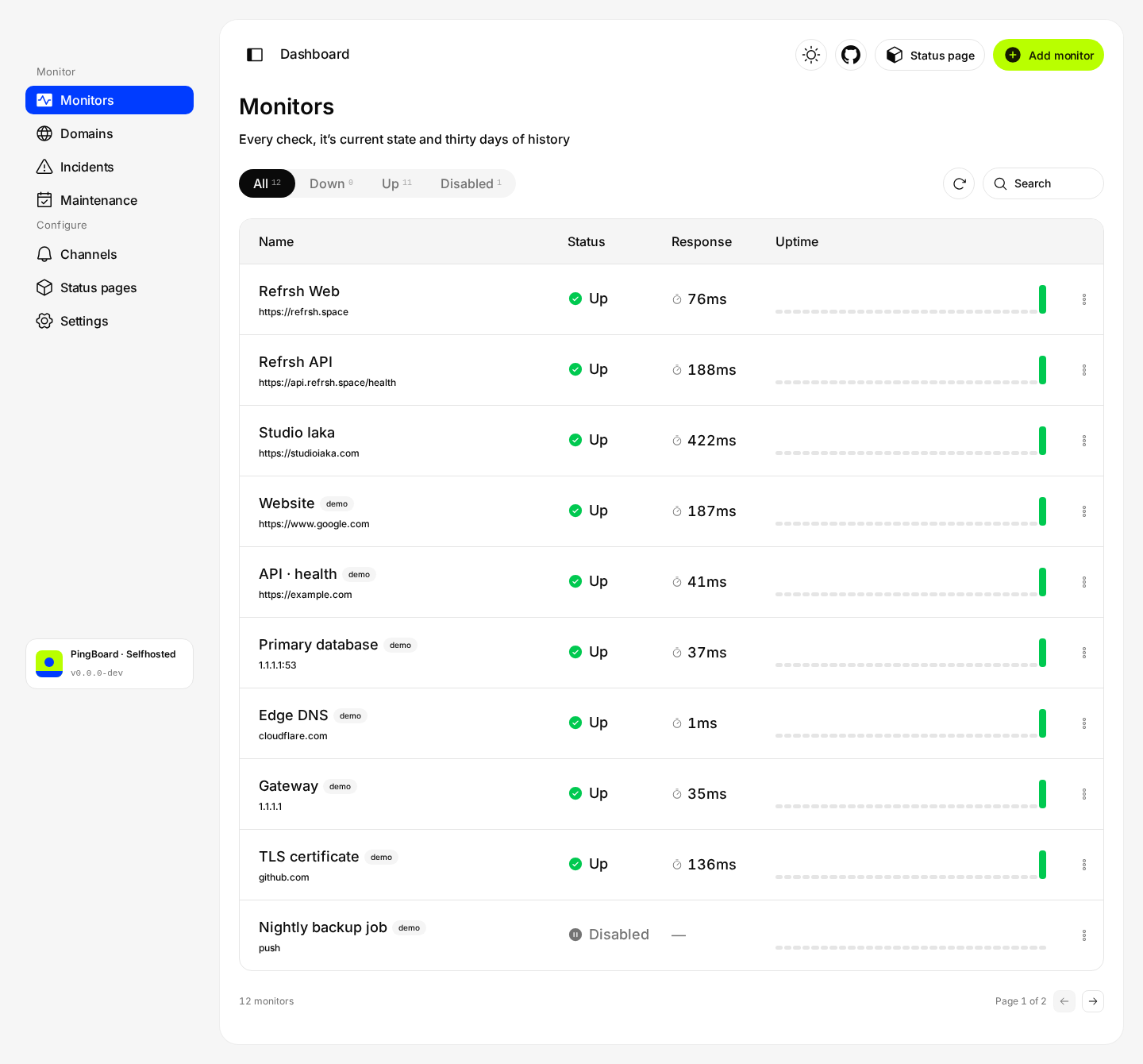
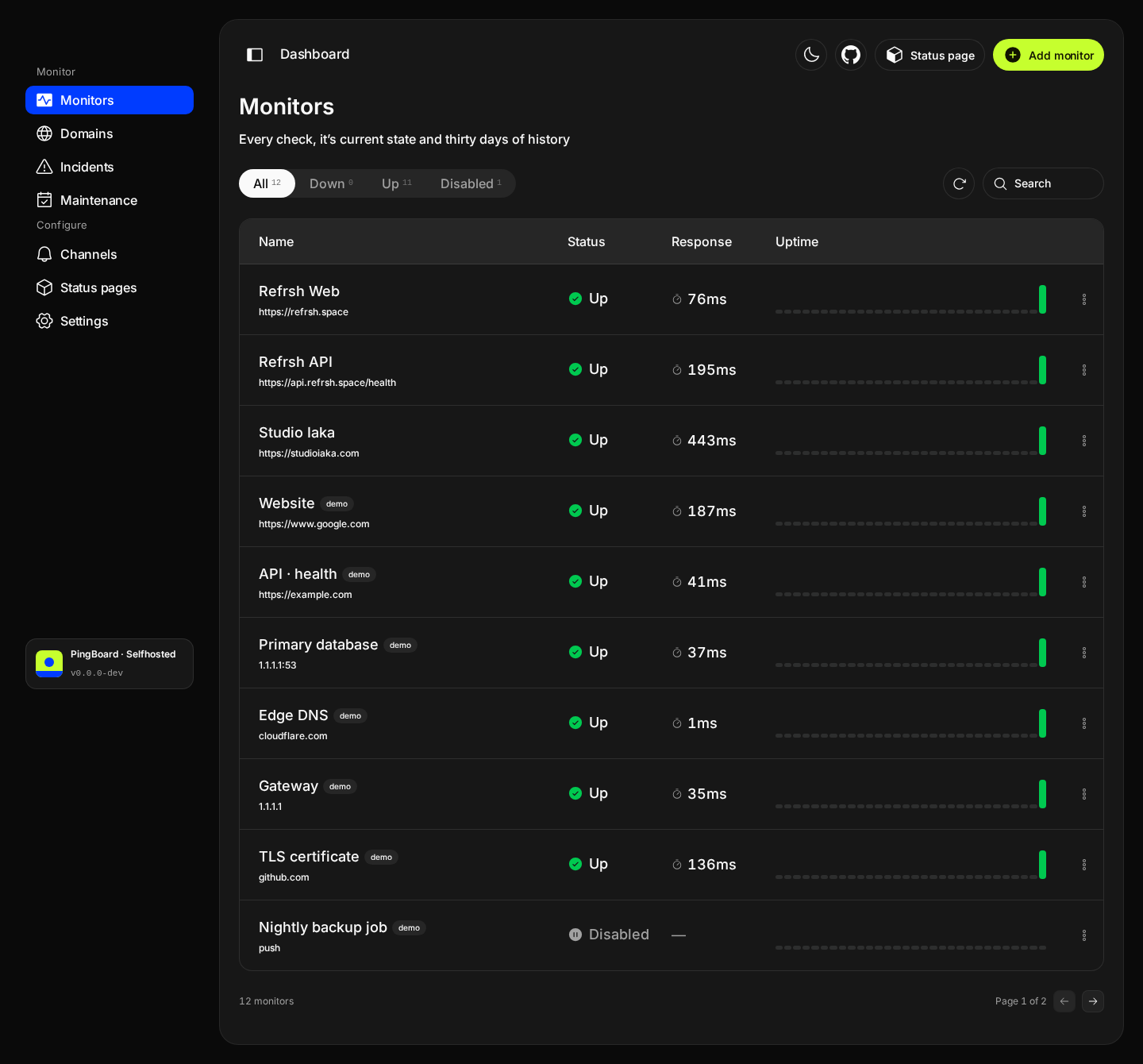
Everything you needto know it’s up
A complete monitoring stack — not a checkbox on someone else’s roadmap.
6 monitor types
HTTP, TCP, ping, DNS, SSL and push/heartbeat — with keyword and JSON assertions on responses.
Status pages
Branded, shareable pages with custom slugs, passwords and a theme that follows each visitor.
Alerts that route
Email, webhook, Discord, Slack and ntfy — per monitor, on both down and recovery events.
Domain & SSL tracking
Registrar, expiry, nameservers and certificates in one place — with warnings before anything lapses.
One container
SQLite, no Redis, no queue. A single `docker run` and you’re live in under a minute.
API & MCP
Drive everything from scripts with API tokens, or ask your AI assistant what’s down over MCP.
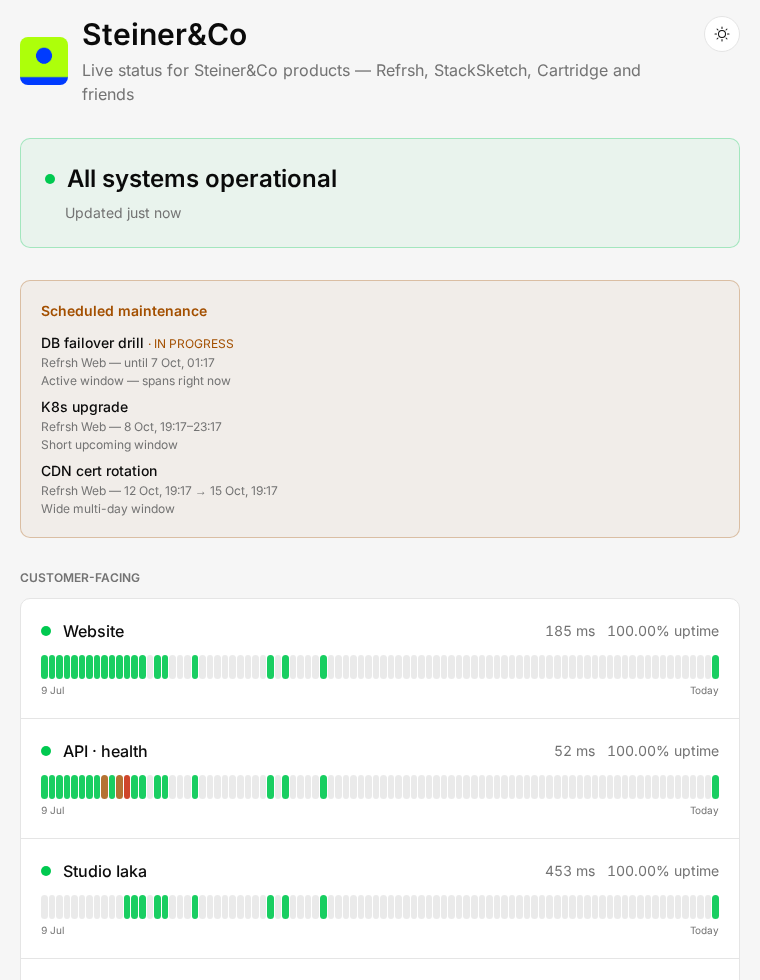
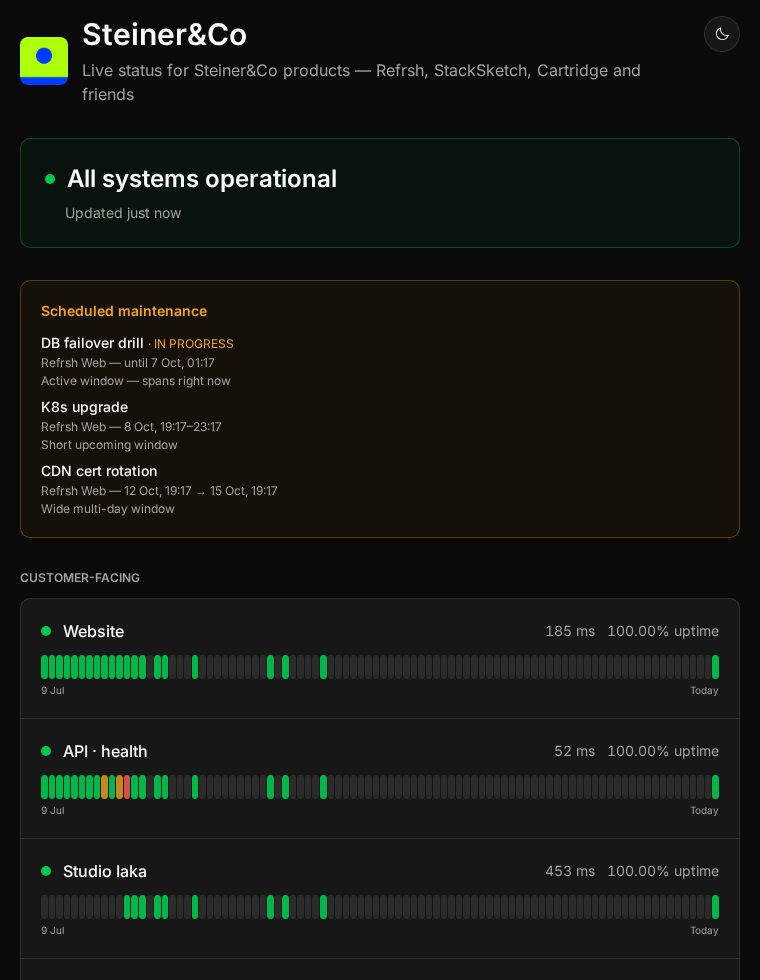
Status pagesyour users trust
Publish a branded page in a click. Incidents and maintenance windows appear automatically — fewer “is it down?” tickets.
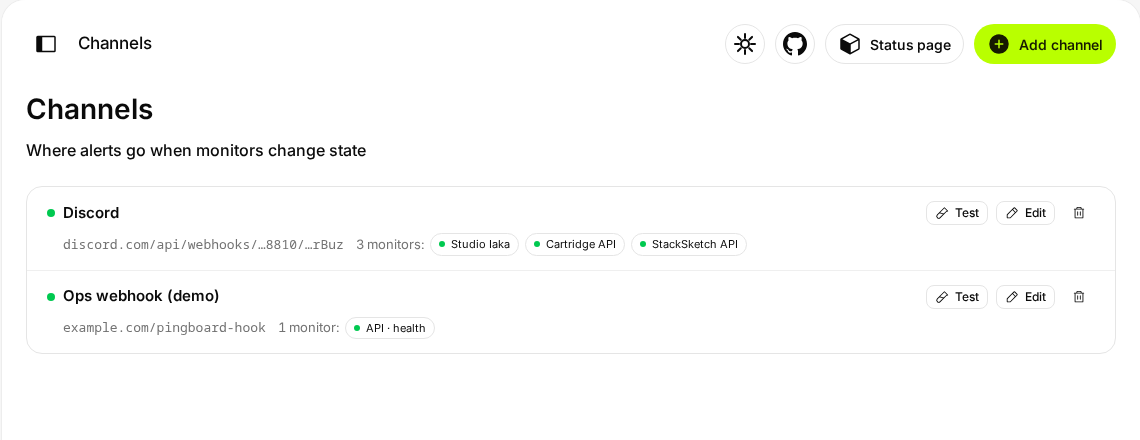
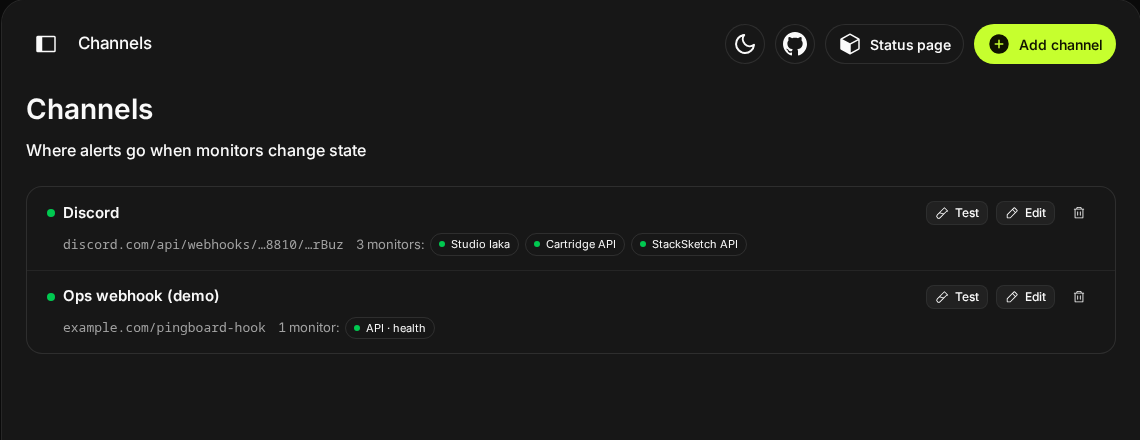
Alerts where yourteam already is
Email, webhooks, Discord, Slack or ntfy — wired up in seconds, routed per monitor, and silenced during maintenance.
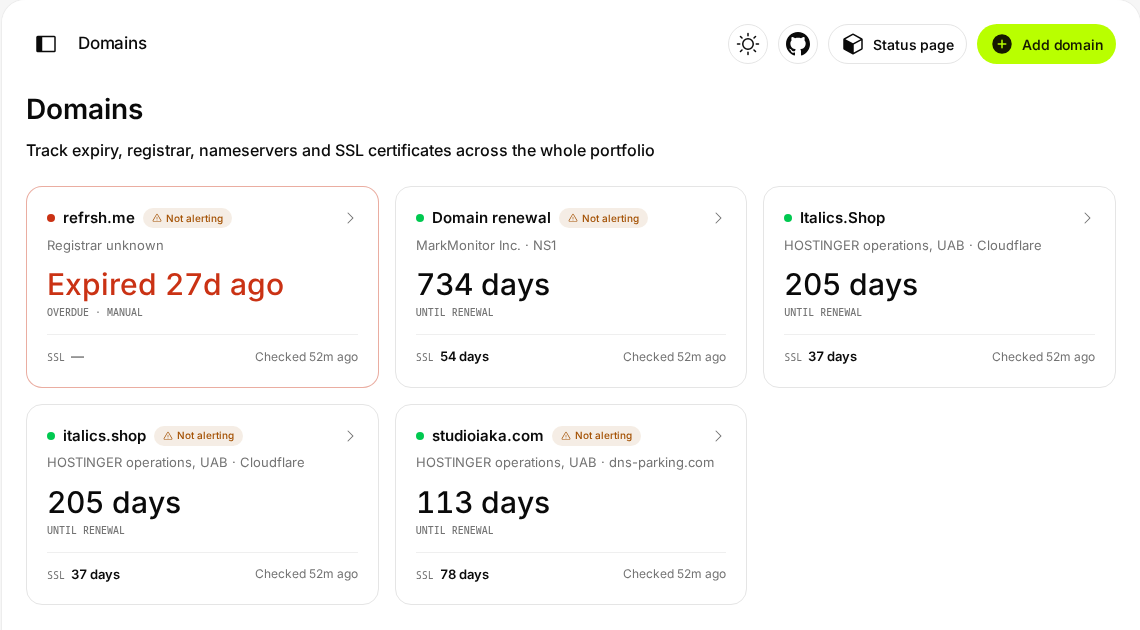
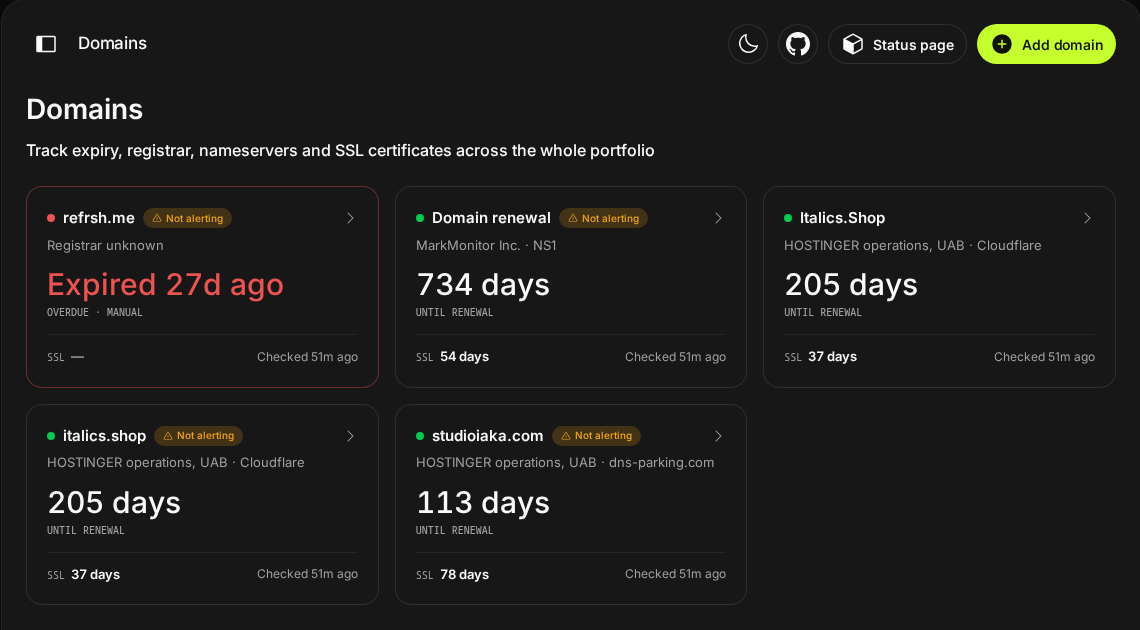
Every domain andcert in one place
Expiry, registrar, nameservers and SSL for your whole portfolio — auto-detected via RDAP, or added by hand. Alerts before anything lapses.
Monitoring shouldn’t cost more than your servers.
Uptime monitoring got bloated and expensive — per-monitor pricing, per-seat plans, and your data living on someone else’s dashboard. PingBoard is the opposite: one small binary, one SQLite file, every feature included. Self-host it on a $5 VPS and watch your whole stack — endpoints, certificates, domains, cron jobs — from a single screen. No account, no limits, no lock-in. Your monitoring, your data, your box.
Pricing
Self-hosted
Every feature, unlimited, on your own infrastructure. One container, MIT-licensed, free forever.
Cloud
Hosted and fully managed, with multi-region probing and zero ops. Same PingBoard — we run it for you.
Frequently askedquestions
Quick answers on pricing, licensing, privacy and setup.
Yes. Self-host it and every feature is unlimited, forever — it’s MIT-licensed. A hosted cloud option is coming later for teams that’d rather not run it themselves.
One `docker run`, or a Compose file. It’s a single container with a SQLite file — no external database, Redis or queue to manage.
HTTP(S), TCP, ping, DNS, SSL-certificate expiry, and push/heartbeat for cron jobs — plus keyword and JSON assertions on response bodies. Domains get their own tracker: expiry, registrar, nameservers and certs across the whole portfolio.
Email, webhook, Discord, Slack and ntfy — routed per monitor, on both down and recovery, and silenced during maintenance windows.
No. You host it; everything lives in your SQLite file on your server. There’s nothing to phone home.
Get started today.
docker run -d -p 3000:3000 -v pingboard_data:/data ghcr.io/steiner-co/pingboard